Blog
Dental hygiene tips for healthy teeth & gums
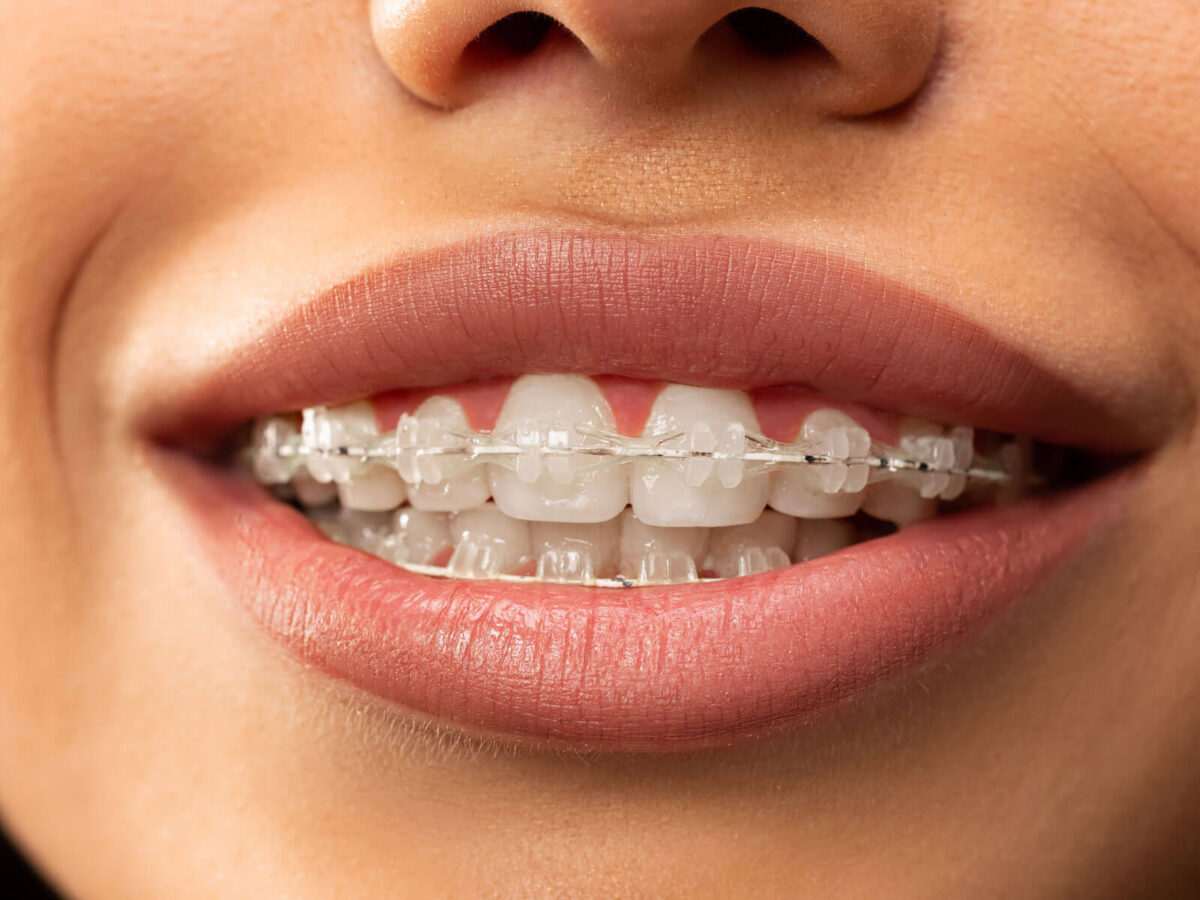
Ceramic Braces: How They Work, Cost & How They Compare to Metal Braces
Ceramic braces work the same way traditional metal braces do. The material’s what changes. Tooth-colored brackets instead of stainless steel, bonded on the same way, pulling teeth through the same steady pressure.
They’re not invisible. Someone standing close enough will still spot them. Orthodontists bring them up anyway, usually as the first thing patients ask about once metal’s off the table. I’ve seen enough consults go this way to know it’s rarely a hard sell.
TL;DR
Tooth-colored brackets, same mechanics as metal, just quieter to look at. Treatment usually takes 12 to 36 months, running a touch longer than metal on average.
The brackets resist staining fine. The elastic ties don’t always. Ceramic braces cost more too, usually landing somewhere around $4,000 – $8,500.
What’s ahead: how the brackets hold up day to day, what actually stains, and how ceramic measures up against metal.
What Are Ceramic Braces
Ceramic instead of stainless steel, blending closer to natural tooth color. Bonded to the front of each tooth, same as metal. A wire runs through them, held with small elastic ties, working the same as a metal system start to finish.
Cleveland Clinic notes that clear braces correct the same range of bite issues as traditional metal, from crowding to gaps to crossbites. Materials are the only real difference.
Most orthodontists offer ceramic to both teens and adults. Less common for younger kids, though, since the brackets are more delicate and need more careful eating habits to avoid damage.
How Are Ceramic Braces Placed
Placement follows a familiar process. Brackets get bonded to each tooth with dental cement. A wire threads through them, anchored with metal bands on the back molars. Clear elastics hold it all in position.
Expect one to two hours in the chair. Some soreness afterward is common, usually gone within three to five days, and ibuprofen or whatever your dentist recommends takes care of it.
An orthodontist looks for other problems first, though. Cavities. Gum disease. Recession. Any of that gets treated before brackets ever go on, since hardware on unhealthy teeth or gums tends to make things worse, not better.
How Do Ceramic Braces Move Teeth
Same mechanism as metal, start to finish. The wire wants to spring back to its original shape. Locked into each bracket, it can’t. That tension is what drags the tooth along with it, one small step at a time.
Adjustment visits happen every four to six weeks, same schedule as metal treatment. The orthodontist tightens or swaps the wire at each visit. Teeth keep moving between appointments only because someone’s actively pulling them there.
Does Treatment Take Longer With Ceramic
Ceramic brackets aren’t as strong as stainless steel, and that gap shows up in the timeline for some patients. Cleveland Clinic puts average treatment length for clear braces between 12 and 36 months, against an average closer to 20 months for metal.
The gap isn’t universal. Mild spacing or minor rotation cases might show almost no difference between materials. Complex bite corrections are a different story. Ceramic’s fragility tends to show up there as a few extra months.
What Ceramic Braces Actually Cost
Ceramic costs more than metal, mostly down to the brackets themselves. They cost more to make, chip more easily, and the elastic ties wear out faster too. All of that adds up in repair costs over the course of treatment.
As a rough range, full treatment lands somewhere between $4,000 and $8,500. Location moves it, sometimes significantly depending on the practice’s market. Case complexity plays a role too. A simple case in a lower cost-of-living area can land well under that range. A complex bite correction, one needing more adjustments or a longer timeline, can run higher, sometimes closer to the top of that range or past it.
Does Insurance Cover Ceramic Braces
Dental insurance sometimes covers orthodontic treatment regardless of bracket type. Coverage details vary a lot by plan, though. Worth calling a provider directly to ask if ceramic gets reimbursed at the same rate as metal. Some plans pay a flat amount instead of a percentage.
Payment plans matter more here than with metal, just because the starting number’s higher. Spreading the total across treatment makes the upfront cost easier to manage. Some practices knock off a bit for paying in full at the start.
See What Ceramic Braces Would Cost You
Get a personalized quote based on your actual bite, not a range pulled off a website.
Do Ceramic Braces Stain
The brackets themselves resist staining fairly well. What actually discolors are the small elastic ties holding the archwire in place.
Cleveland Clinic lists dark-colored foods and drinks as common culprits behind visible discoloration – coffee, tea, red wine, tomato sauce. Smoking speeds it up too, and it hits the tooth enamel around the ties, not just the ties themselves.
How to Reduce Staining
Ties need to get swapped at every adjustment, every four to six weeks. Keeps visible buildup in check between visits. Brushing and flossing daily helps too, along with easing off anything that stains.
Regular cleanings help too. Plaque around brackets dulls the whole look even without technical staining. It builds a filmy layer, catches light differently than clean enamel does. A quick water rinse after coffee, tea, or wine helps in the meantime. Small habit, adds up over months.
Ties are cheap to replace, too, so bringing up a visibly discolored one at the next visit instead of waiting is worth doing. Most orthodontists won’t mind swapping one early if it’s bothering a patient before the scheduled appointment.
Metal Braces vs. Ceramic – Where They Actually Diverge
Appearance. Ceramic blends closer to natural tooth color. Metal just looks like metal. For most people, this is the whole decision right here.
Durability. Metal holds up better under daily wear. Ceramic chips more easily, especially with hard or sticky foods.
Cost. Ceramic braces vs metal braces almost always comes down in metal’s favor on price. Ceramic material costs more, and placement takes a bit more care too; both show up on the bill.
Treatment Time. Metal tends to run a touch faster on average. Complex ceramic cases can stretch longer, since the brackets don’t hold up quite as well under pressure.
Who Tends to Choose Which Option
Teens and adults who care about how they look, especially at work or in social settings, tend to lean ceramic despite the extra cost. Younger kids and patients with severe crowding usually get steered toward metal. Durability wins out there, and so does price, and I’ve seen that split hold up pretty consistently across different practices.
Neither option is universally better. It comes down to how much appearance matters against budget and durability, and sometimes it’s a mix of both pulling in different directions at once. Worth talking through directly with an orthodontist, not deciding ahead of time.
FAQ
Is staining an actual risk with ceramic?
The brackets hold up well. Elastic ties are the weak point; coffee and tea leave a mark on those over time.
Are ceramic braces more expensive?
Usually, yes. Higher material cost, plus repairs that come up along the way.
How long does ceramic braces treatment take?
Somewhere in the 12 to 36 month range, running a bit past metal for a similar case sometimes.
Can ceramic braces break easily?
More fragile than metal. Steer clear of hard and sticky foods, and that mostly takes care of itself.
Do ceramic braces hurt more?
No real difference there. Soreness after placement and adjustments is just part of it either way.
Conclusion
Ceramic braces get the same results as metal. Just quieter to look at, and pricier for it. Appearance against cost and durability, that’s really what patients are weighing when they pick one over the other.
A consultation is still the only real way to know what fits a given case and budget. An orthodontist looking at an actual bite tells you more than any article can.
Ready to Compare Your Options?
Find out if ceramic or metal fits your case better. One visit gets you a real answer.