Blog
Dental hygiene tips for healthy teeth & gums
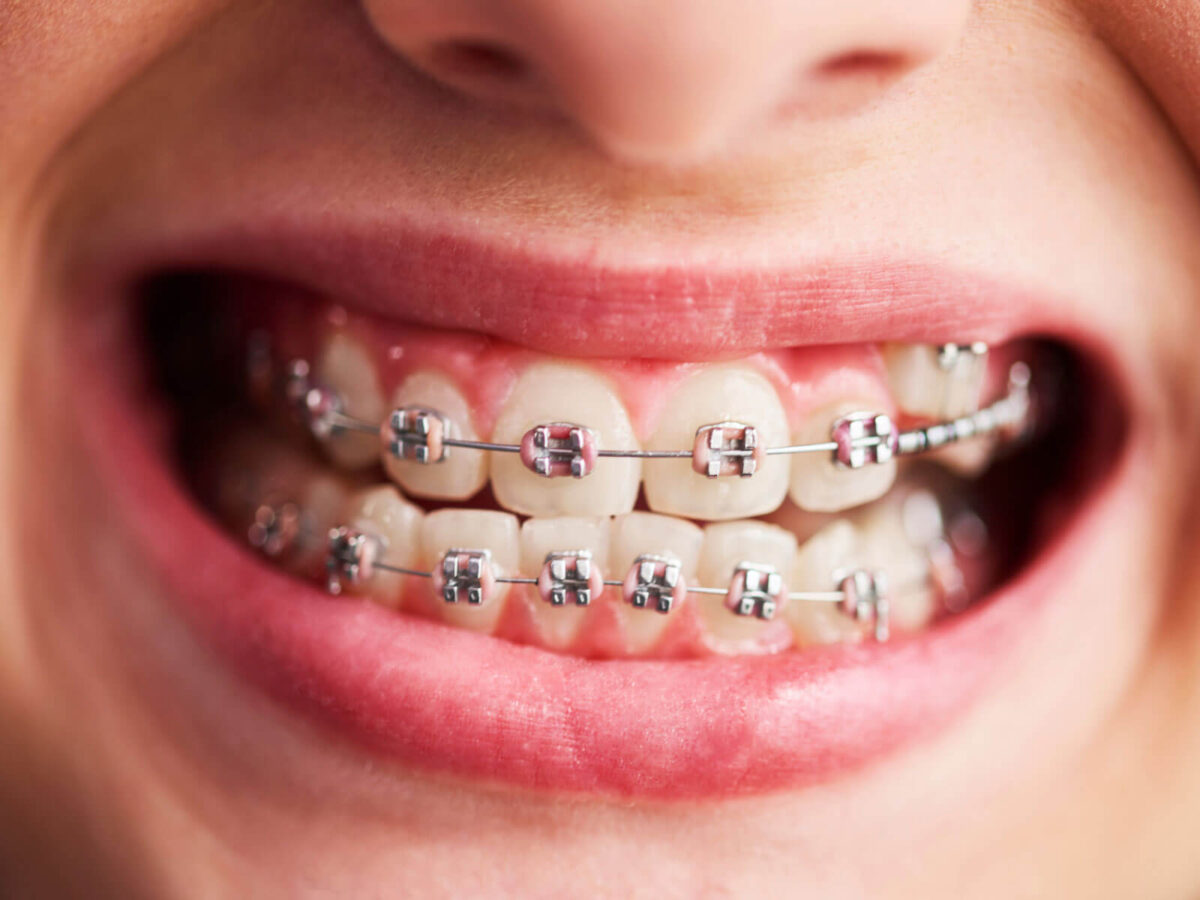
Traditional Metal Braces: How They Work & What They Actually Cost
I’ve worked with enough orthodontic content to know traditional metal braces still get recommended more than any other fixed appliance. Metal on every tooth, wire running through it. Basically the same setup it was thirty years ago.
Orthodontists reach for metal braces first on complex bite cases. It holds up under force in ways some newer systems still can’t match. Patients tend to assume the newest option is the strongest one. Not always.
TL;DR
Traditional metal braces use stainless-steel brackets and a wire, tightened over time until teeth land where they should. Full treatment runs $3,000 – $7,000, spread across 12 to 36 months depending on the case.
They’re still the cheapest fixed option out there. For complicated bites, they hold up better than most of what’s replaced them. Adjustments land every four to six weeks.
Below: what treatment actually costs, what the first month feels like, and where ceramic falls short by comparison.
What Are Traditional Metal Braces
Metal on every tooth, wire running through it. That’s the whole idea behind traditional metal braces, and it hasn’t needed an upgrade in years. Nothing exotic about the design, and that’s kind of the point.
I’ve read the MouthHealthy page on this a few times. What braces are actually correcting is malocclusion, teeth or jaws that don’t sit right against each other. Ignore it long enough and chewing gets harder. Sometimes speech too.
Cases range from mild rotation to serious bite correction. Traditional metal braces don’t work any differently depending on which one you’ve got. The timeline shifts. The mechanism doesn’t.
What’s In a Bracket-and-Wire Setup
Manufacturers make brackets in different sizes. The basic parts don’t change, though. A bracket sits on every tooth. An archwire threads through them. Ties hold that wire in place, elastic or metal depending on the case.
I’ve asked orthodontists why they pick one bracket type over another for a given case. Usually comes down to how much force a tooth needs to move. That’s how metal braces work once everything’s on: the archwire holds constant tension, the ties keep it seated against each tooth.
How Do Metal Braces Move Teeth
Pressure. Slow, steady, relentless pressure.
The archwire wants to spring back to its original shape. Locked into the brackets, it can’t. So it drags each tooth along with it instead, a fraction of a millimeter at a time. Same idea for eighty years, give or take, since the physics never got old.
Every four to six weeks, the wire gets tightened, sometimes swapped for a thicker one as treatment moves along. Teeth don’t shift on their own between appointments. Someone’s actively pulling them there.
Why Does Age Affect Treatment Time
Cleveland Clinic places the ideal starting age between 9 and 14. A still-developing jaw responds faster to movement at that stage.
That doesn’t rule adults out. Treatment tends to run longer, because a jaw that’s finished growing resists movement more than one still developing. Removing or loosening a tie at the wrong point can slow progress or shift a tooth off track. That’s why adjustment visits stay on a strict schedule instead of happening as needed.
What Do Traditional Metal Braces Cost
Ask five orthodontists, get five different numbers back. Location plays into it. Insurance too. Mostly it comes down to how complex the case is.
Metal braces cost somewhere from $3,000 – $7,000 for most people, full treatment included. Complex cases, extra visits, a longer timeline, all of that pushes the number higher. A simple case in a lower cost-of-living area can land well under that range.
One pattern holds fairly steady across quotes though: metal tends to price below ceramic and lingual braces. Often below aligners too, once a case needs enough extra trays to add up. Cost isn’t the only reason metal stays the default recommendation past mild spacing, but it’s a big one.
What About Insurance and Payment Plans
Some dental plans chip in on orthodontic treatment, more often for kids than adults. Coverage swings a lot from plan to plan, though. Calling a provider before the consult tends to surface benefits people didn’t even know they had.
Payment plans are common too, and underused. Spreading the total across the length of treatment turns a number that feels impossible into one that fits a normal budget. Some practices also knock off a bit for paying the full amount upfront.
Retainers aren’t always in the initial quote. Neither are emergency repairs or follow-up visits. Ask what’s bundled into the price and what gets billed separately later. That’s how most people avoid the surprise costs that show up after treatment starts.
See Your Actual Treatment Plan
Skip the guesswork. An orthodontist looks at your bite and tells you what it needs.
What Does the First Month Feel Like
Soreness is common for the first two to four days. The mouth just isn’t used to having hardware in it yet. Soft foods make that stretch easier, and most of the discomfort responds well to standard over-the-counter pain relief.
By week two, things settle. People start avoiding certain foods without really thinking about it, and the brackets stop feeling like foreign objects. Each follow-up adjustment brings back a milder version of that early soreness, usually for a day or two.
What’s Off-Limits While Wearing Braces
Food finds its way into places it never used to. You end up brushing after every meal whether you planned to or not, and floss threaders and interdental brushes do the work a regular toothbrush can’t reach.
Sticky candy is off the table. Hard nuts too, and ice, and anything that needs biting straight through with the front teeth. Cutting harder foods into smaller pieces first sidesteps most of that risk.
Metal Braces vs Ceramic – What Actually Changes
Looks. Metal brackets show. Ceramic blends closer to natural tooth color, and that’s usually the whole reason someone picks one over the other.
Durability. Metal holds up well under daily wear. Ceramic chips more easily and stains if coffee or tea sit against it without careful cleaning.
Price. Metal braces vs ceramic braces isn’t close on cost. Ceramic costs more to manufacture and place, and that shows up on every quote.
Speed. Treatment length runs roughly similar for most cases. Ceramic can add time here and there, since the brackets aren’t quite as strong as steel and sometimes need extra care during adjustments.
Neither option wins outright. It usually comes down to budget against appearance, and which one someone’s more willing to bend on.
FAQ
Do traditional metal braces hurt?
The first few days, yeah, and it comes back a bit after every adjustment. Ibuprofen or whatever your dentist recommends takes the edge off.
Can adults still get metal braces?
Plenty of adults do it. It just runs longer than it would at 12, because the jaw’s already done growing and doesn’t give as easily.
How often are adjustment visits?
Every four to six weeks or so, all the way through treatment.
Is metal cheaper than clear aligners?
Usually, and the gap widens the more complex the case gets. Aligners aren’t cheap once you’re past minor spacing fixes.
What happens if a bracket breaks?
Call your office. Most keep room in the schedule for exactly this, and it’s not something that needs an ER-style panic. Just don’t sit on it for weeks.
Conclusion
Nobody’s calling traditional metal braces exciting. They’ve looked the same for decades, and nobody’s rushing to change that. They still handle the hard cases better than most of what’s replaced them. Usually cheaper too.
Anyone actually weighing options gets more out of a consultation than another number pulled off the internet. An orthodontist looking at a real bite tells you more than any range online can.
Start Your Consultation Today
Stop guessing what your treatment will cost. Get a plan built around your teeth, not an estimate.